Beneath Cairo: Inside the Hidden Underground Spaces of the City’s Historic Landmarks
architecture cairo history Egypt History underground
Safy Allam
Image via website
Cairo’s streets are alive with history; however, some of its most intriguing stories lie far below the surface. Beneath the pavements, churches, mosques, and museums exists a concealed architectural world, sealed basements, Roman passageways, forgotten cisterns, and abandoned infrastructure. These places rarely appear on tourist maps, yet they form an alternative hidden layer of the city, shaping its identity across centuries.
The Egyptian Museum’s Basement: An Archive of the Unknown
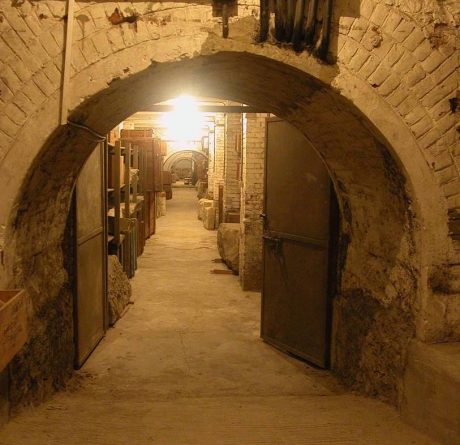
Image via website
Most people know the Egyptian Museum in Tahrir Square as home to some of the world’s greatest pharaonic treasures, yet few realise that the museum stands above a vast basement rarely seen by the public. This underground storehouse contains thousands of artefacts that have never been displayed. Many pieces arrived decades ago in wooden crates, which were placed directly in the basement without being opened.
The space has been described as a labyrinth of sealed boxes, forgotten relics, and uncatalogued collections that hold untold academic value. With major exhibitions shifting to the Grand Egyptian Museum, the basement of the Tahrir building remains one of Cairo’s most mysterious archaeological vaults, an archive of the unknown waiting quietly beneath the city centre.
Roman Passages Beneath Coptic Cairo
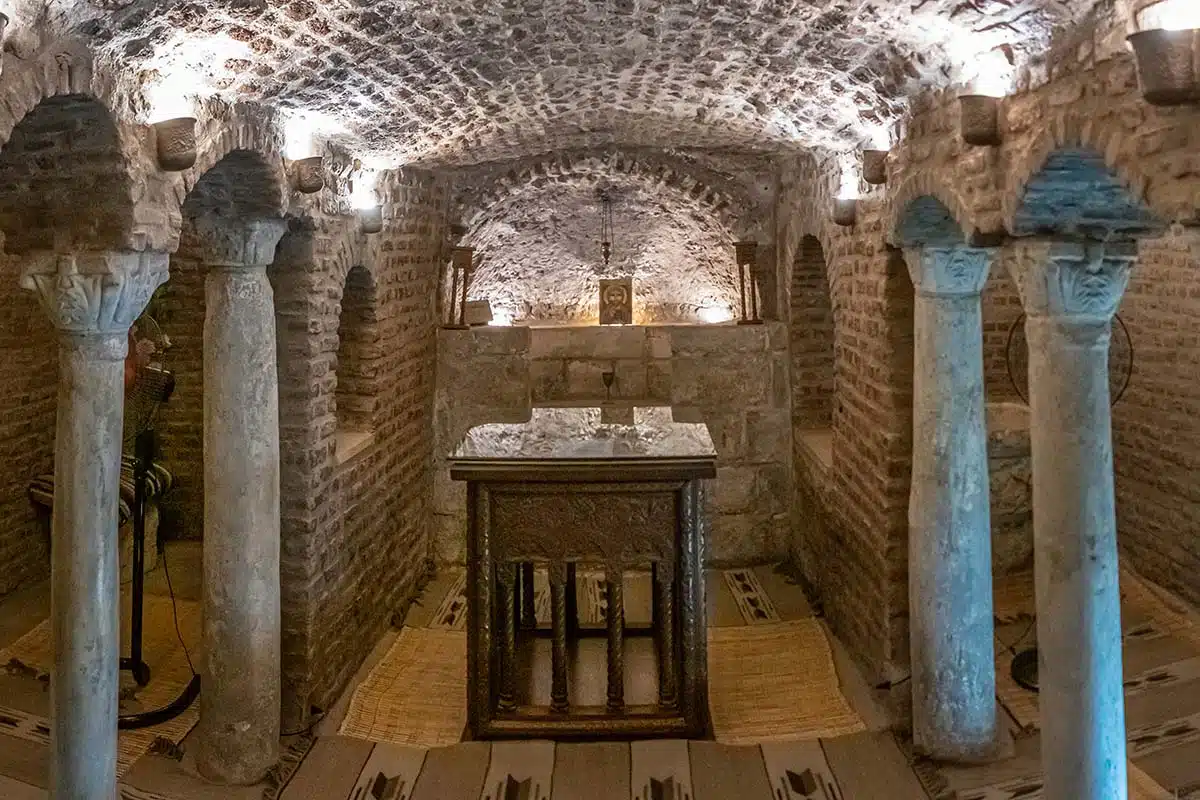
Image via website
Old Cairo sits above layers of Roman engineering that predate the churches standing there today. The area once formed part of the Roman Babylon Fortress, which included underground corridors used for storage, soldier movement, and defence. Over time, as Christianity spread in Egypt, these subterranean spaces were absorbed into the foundations of early churches. Some were transformed into crypts, while others were sealed off entirely.
Beneath the Hanging Church, Abu Serga, and the surrounding complex, traces of these Roman tunnels still exist: low, stone-lined passageways that supported a fortified settlement long before the rise of Islamic Cairo. In several places, the floors of present-day churches stand directly above what was once a network of Roman underground chambers.
Although most of these tunnels are no longer accessible, their presence gives Coptic Cairo an extraordinary vertical depth, where modern worship is physically rooted in ancient military architecture.
The Cistern of Suleiman Agha Al-Silahdar on Al-Muizz Street
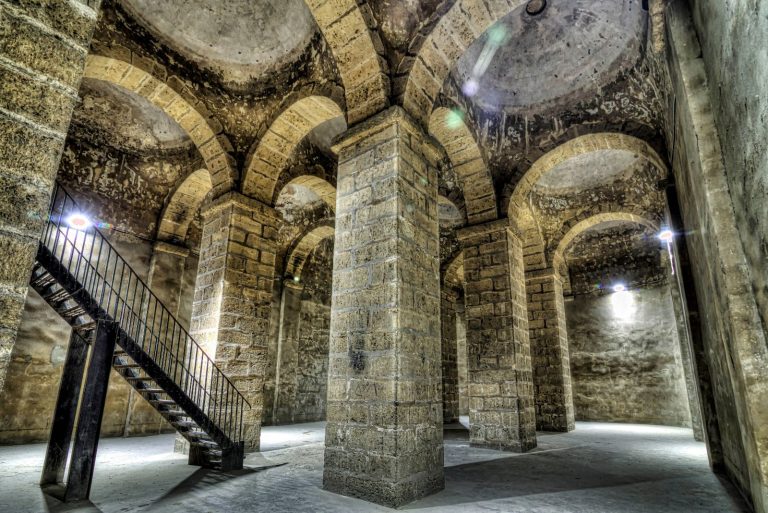
Image via website
In historic Islamic Cairo, many of the city’s hidden spaces were built not for defence but for public function. One of the most atmospheric examples lies beneath the mosque and sabil-kuttab of Suleiman Agha al-Silahdar on Al-Muizz Street. The nineteenth-century complex was constructed with a large underground cistern designed to store water for the public fountain above.
The cistern still survives beneath the building: a cavernous stone chamber with thick walls, vaulted ceilings and a cool, echoing interior that once kept water clean before the days of modern plumbing.
Though closed to visitors, restoration teams have documented the space extensively, revealing a structure that demonstrates Cairo’s traditional approach to water management and civic architecture. Above ground, the site blends seamlessly into the bustle of Al-Muizz; below it lies a silent reminder of the city’s past originality.
The Forgotten Sewage System Beneath Downtown Cairo
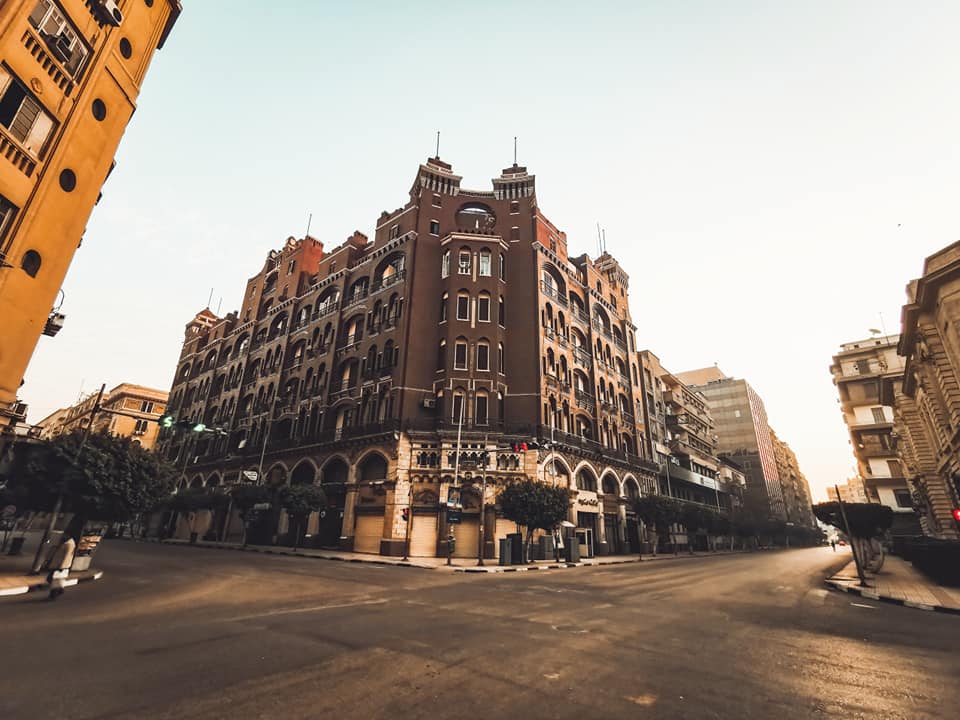
Image via website
While many of Cairo’s underground spaces date back centuries, others reflect the city’s attempts at modernisation in the nineteenth century. Under some regions of Downtown Cairo, remnants of an early sewage network remain, an ambitious project introduced during the rule of Khedive Ismail as part of his effort to reshape Cairo into a modern capital.
These early pipes and channels no longer serve their original function, but they represent the first steps toward an organised underground infrastructure. Their placement beneath the grand boulevards and European-style buildings of Downtown forms a striking contrast to the Roman passages and medieval cisterns found elsewhere in the city.
Together, they highlight how Cairo evolved vertically as much as horizontally, with each era leaving its mark beneath the ground as much as above it.
A City Built in Layers
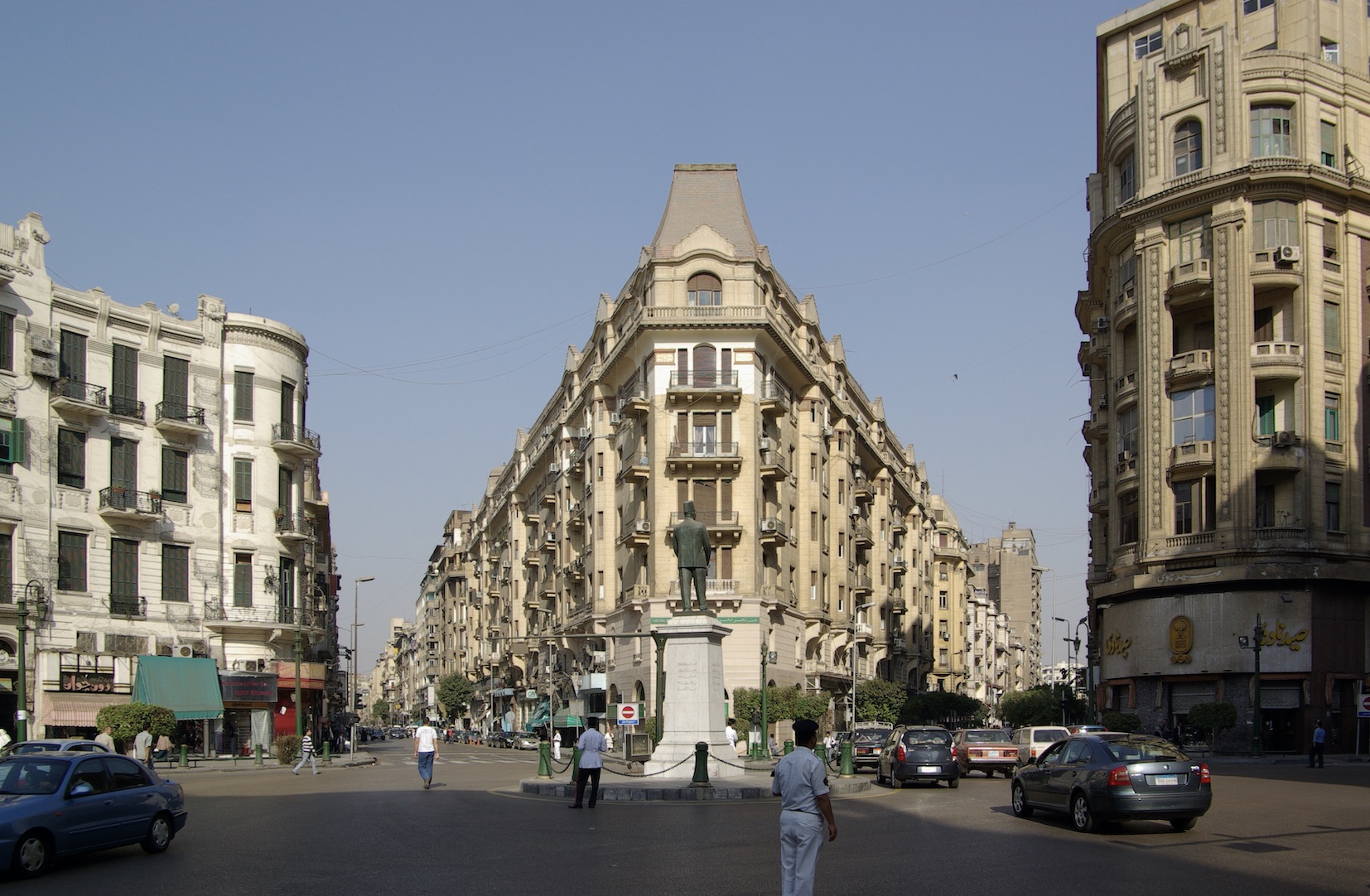
Image via website
Taken together, these underground spaces reveal an alternative map of Cairo, one shaped by storage, defence, worship, and civic necessity. The sealed basement of the Egyptian Museum holds untapped archaeological potential. The Roman tunnels of Coptic Cairo echo with the past beneath some of Egypt’s oldest churches. The cistern of Al-Silahdar Mosque offers a glimpse of traditional urban engineering, while the early sewage systems under Downtown tell the story of a city stepping into modernity.
Cairo has always been a city of layers, but its underground world is perhaps its most compelling. These hidden chambers, tunnels, and basements remind us that history in Cairo is not only visible in monuments and skylines. Much of it lies concealed beneath our feet, waiting for the right moment or the right eyes to be rediscovered.
recommended
 City Life
Media Republic Expands into Saudi Arabia with Arsan Global Partnership
Advertising Agencies Arsan Global +7 City Life