

Umm Arak Plateau: South Sinai’s 10,000-Year-Old Open-Air Gallery Comes to Light
archaeology architecture arts and culture Egypt History Umm Arak Plateau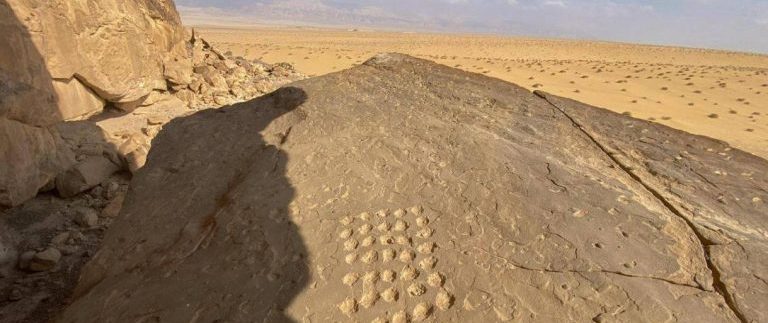
Safy Allam
Just when you think Sinai has revealed all its secrets, it surprises us again.
High above the desert floor of South Sinai, not far from the ancient mining site and temple complex of Serabit el-Khadim, archaeologists have unveiled a newly documented site that is already being described as one of the most significant recent discoveries in Egyptian rock art. Known as Umm Arak Plateau, the site is effectively a natural archive of human life stretching back nearly ten millennia.
And it’s not just another archaeological headline. It’s a layered story of hunters, travellers, traders, and early settlers who left their mark —quite literally— on the sandstone walls of a desert shelter.
A Natural Canvas Shaped by Time
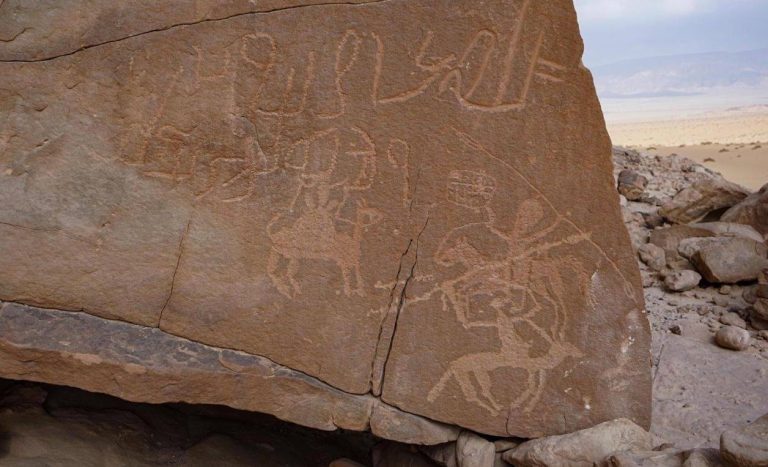
At the heart of Umm Arak lies a vast sandstone rock shelter extending for more than 100 metres along the eastern edge of the plateau. Formed naturally and protected by a sloping ceiling that reaches several metres in depth, the shelter provided ideal conditions for habitation and artistic expression across thousands of years.
What researchers from Egypt’s Supreme Council of Antiquities have documented here is nothing short of remarkable. The rock surfaces are covered with paintings and engravings executed in different styles, pigments, and techniques, revealing distinct phases of occupation.
Some of the earliest red-pigmented drawings are believed to date as far back as 10,000 BCE. These prehistoric images include animal figures and symbolic forms that hint at early communities living in a landscape that looked very different from today’s arid terrain. Later engravings depict hunting scenes, complete with archers and dogs, offering rare visual insight into daily life and survival strategies in ancient Sinai.
From Prehistory to the Islamic Era
What makes Umm Arak particularly compelling is not just its age, but its continuity.
As centuries passed, new layers of expression were added to the stone. Among the engravings are depictions of camels and horses, some shown with riders carrying weapons, suggesting activity during historic trade and caravan periods. These images reflect Sinai’s long-standing role as a crossroads linking Africa and Asia.
Even more telling are the inscriptions. Nabataean writings — associated with the ancient Arab civilisation that flourished between the 4th century BCE and the 2nd century CE — appear alongside early Arabic inscriptions dating to the Islamic era. Together, they demonstrate that Umm Arak was not an isolated prehistoric shelter but a site revisited and reused across generations.
It is this chronological range, from prehistoric communities to early Islamic travellers, that has led experts to describe the plateau as an open-air museum carved into stone.
Everyday Life Written in Rock
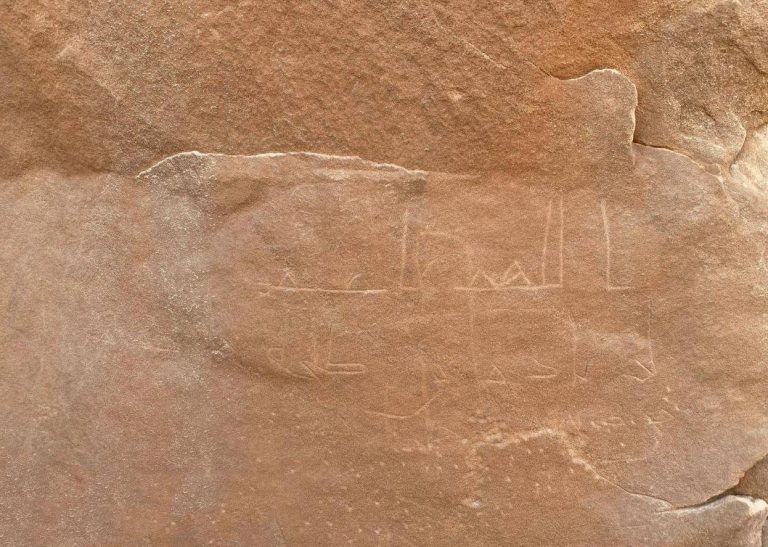
The discovery is not limited to art alone. Archaeologists have uncovered stone tools, pottery fragments, and evidence of human activity spanning multiple historical periods. Some ceramic remains are believed to date to Egypt’s Middle Kingdom, while others correspond to the Roman era.
There are also traces of hearths and structural remains, suggesting that the site functioned as more than a symbolic or ritual space. It was a place of gathering, shelter, and everyday life. From hunters seeking refuge to traders crossing desert routes, Umm Arak appears to have served as a strategic stopover overlooking the surrounding terrain.
In a region often associated primarily with its religious and Pharaonic landmarks, this discovery broadens the narrative of Sinai’s past.
A New Chapter for South Sinai
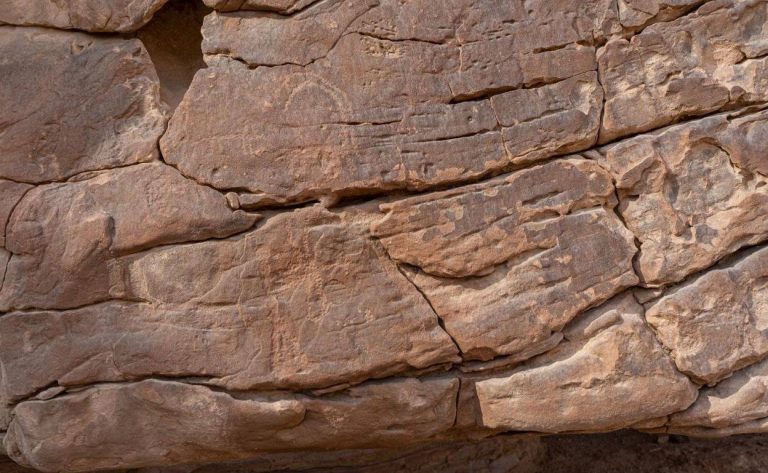
Officials from the Ministry of Tourism and Antiquities have described the find as a major addition to Egypt’s archaeological record, emphasising its cultural and historical importance. Ongoing studies aim to analyse the different artistic phases more closely, while conservation plans are expected to ensure the site’s protection.
For travellers, history enthusiasts, and cultural explorers, Umm Arak offers something refreshingly different. It’s not about towering monuments or monumental architecture. Instead, it’s about intimacy — human hands pressing pigment onto stone, carving symbols into rock, leaving stories behind for thousands of years.
In a landscape shaped by wind and silence, those stories have endured. And now, the plateau is finally ready to tell them.
recommended
 City Life
Battle of Flavours: Legacy vs Trend in Egyptian Desserts — El Malky vs B.Laban
C360 Food Cairo Culture +5 City Life
Lunar New Year and Valentine’s Day: A Season of Celebration at Four Seasons at The Nile Plaza
Four Season at the Nile Plaza ramadan 2026 City Life
Fairmont Nile City Presents a Refined Ramadan of Gatherings and Flavours
Fairmont Nile City Ramadan ramadan 2026 Arts & Culture